Why a Viking Appliance Keeps Tripping the Breaker: When to Stop Resetting
A breaker that repeatedly trips is doing safety work. Depending on the appliance, the cause can be household wiring, moisture, heaters, motors, compressor/start hardware,…
Arcing can be caused by inappropriate metal, damaged accessories, heavy food residue, cavity damage, or an internal high-voltage problem. Continuing to run the microwave can worsen damage.

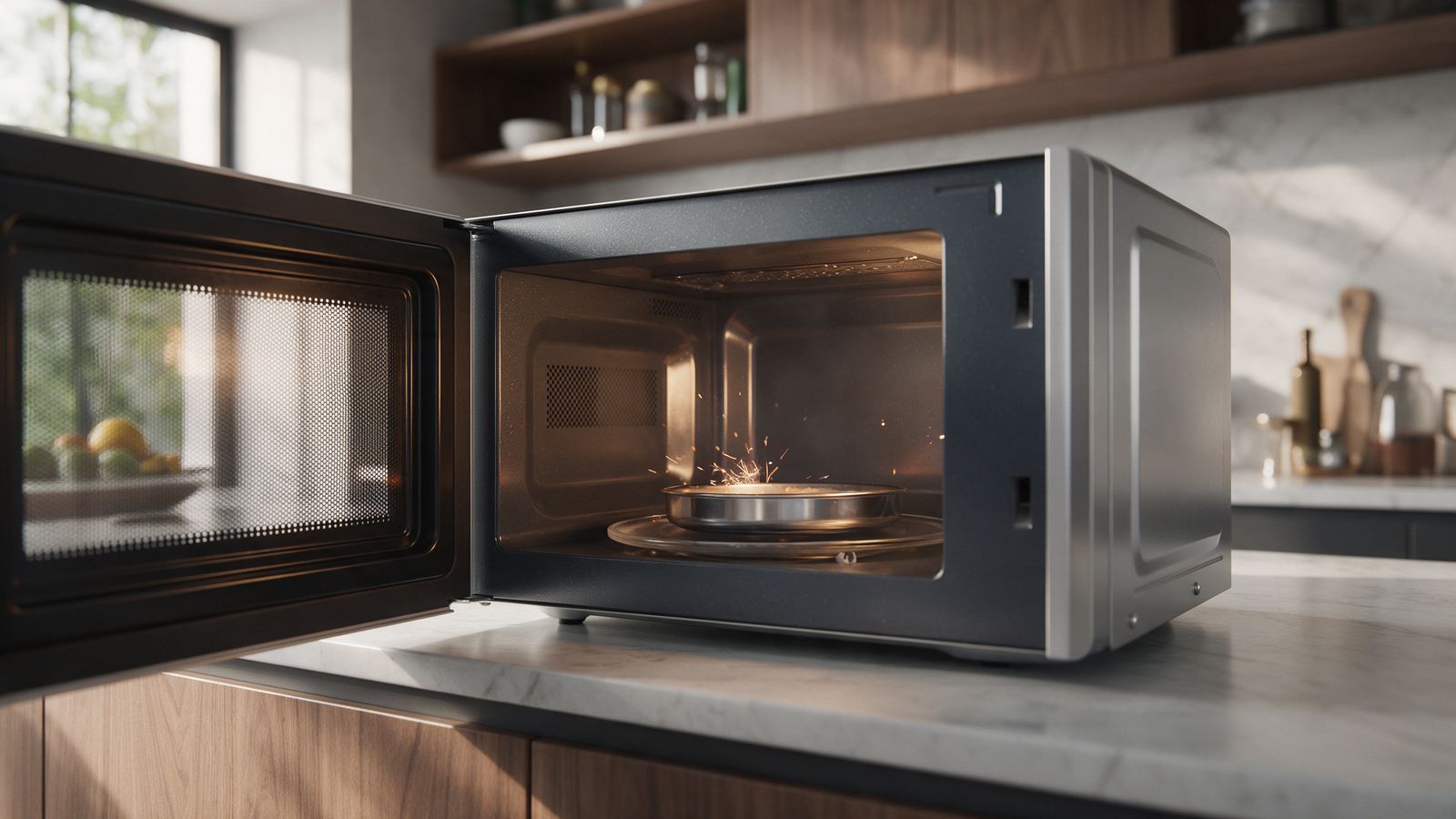
If a Viking microwave sparks or arcs, stop it right away, let it cool, and look only for obvious metal, loose debris, or heavy food residue. Do not run it again if the arcing returns with suitable cookware and a clean cavity, or if the door, seals, or cavity look damaged.
Arcing can be caused by inappropriate metal, damaged accessories, heavy food residue, cavity damage, or an internal high-voltage problem. Continuing to run the microwave can worsen damage.
| Symptom | What it can point to | What you can safely check |
|---|---|---|
| Sparks right after metal went in | Inappropriate metal or a damaged accessory | Stop, let it cool, and remove the item |
| Sparks from the same spot on later uses | Residue or damage in the cavity | Wipe accessible surfaces after cooling; do not open the cabinet |
| Arcing with clean cavity and suitable cookware | A fault beyond owner checks | Leave it off and book service |
| Bent door or damaged seals | Door or seal damage | Do not operate it |
| Burning odor or smoke | A hazard | Stop, leave it off, and unplug only if safely reachable |
Viking microwaves can contain hazardous high-voltage components. Homeowner troubleshooting should stay external; cabinet removal is not an owner-level step.
Arcing is electrical energy jumping across a gap, and the microwave’s own energy source is what feeds it. Running the oven to see whether it continues can burn the cavity or accessories and turn a small cleaning issue into a damaged cavity. That is why the first instruction is simply to stop and let it cool.
Keep cookware choices simple afterward. Use only containers and accessories that you know are made for microwave use, and keep metal, foil edges, and damaged accessories out of the cavity so that any later arcing can be traced to the oven rather than the load.
If arcing returns with appropriate cookware and a clean cavity, leave the microwave off and arrange service.
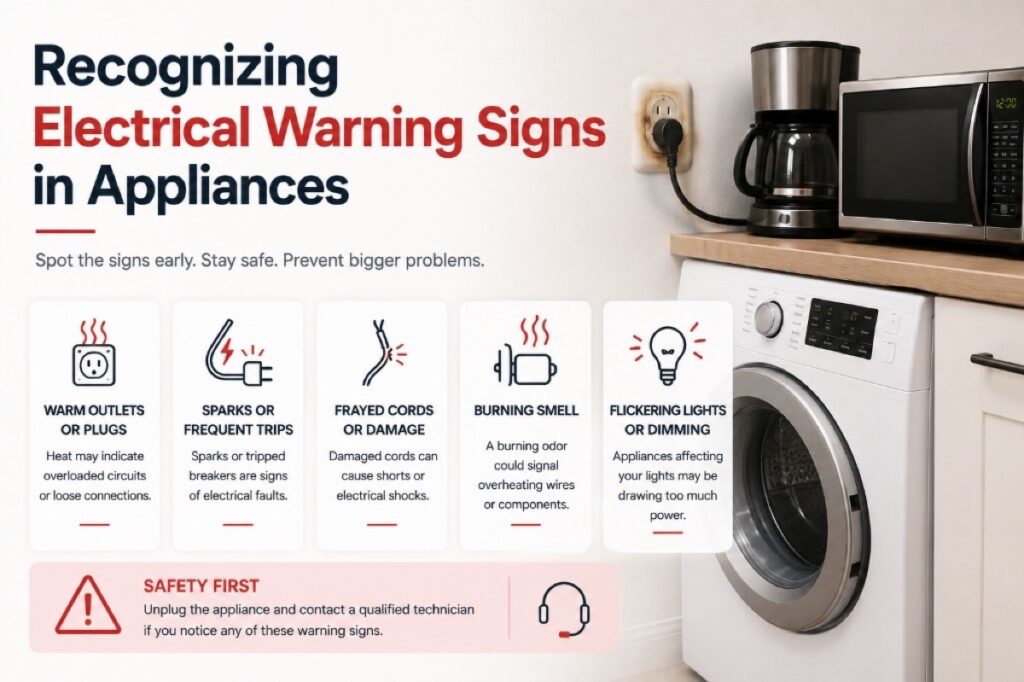
Stop normal operation for smoke, sparking, burning electrical odor, repeated breaker trips, persistent gas odor, uncontrolled overheating, water contacting electrical connections or other clear fire/gas/electrical/flooding hazards.
Do not bypass safety devices or perform live electrical, internal gas, sealed-refrigeration, induction-power or microwave high-voltage work.
The use-and-care manual for one Viking microwave says to keep the waveguide cover clean, because food residue can cause arcing or fire. It also says not to operate the microwave if it is damaged, if the door is bent, or if the seals are damaged. Those two points give you a practical check. Look at the visible cavity surfaces, and look at how the door closes against its seals, without removing any part of the cabinet.
If cleaning the visible surfaces and removing any metal does not stop the arcing, the next step is service, not experimentation.
Write down:
Those details reduce repeated owner checks and help the technician choose a focused diagnostic path.
Viking microwave manuals discuss arcing as a cleaning and damage issue, not as a code. Viking also publishes no numeric code table for gas ranges and ovens, so a message from another appliance should never be applied here.
Leave heavy professional ranges, built-in refrigerators, wall ovens, undercounter products and tightly installed appliances in place unless the service team specifically requests access. Moving an appliance without a plan can disturb flooring, cabinetry, anti-tip hardware, gas, electrical, water, drain or ventilation connections.
For condos, high-rises, gated properties and custom kitchens, include loading, elevator, shutoff, parking and clearance information when booking.
Do not clear a useful code before recording it. Do not order a part because another Viking owner described a similar symptom. Do not apply an oven F-code meaning to a refrigeration or dishwasher platform without verification.
One controlled owner-level check is useful when it answers a question. Repeated resets and panel removal usually remove evidence instead of adding it.
For adjacent symptoms, read Viking Microwave Runs but Does Not Heat: External Checks Before High-Voltage Service and Viking Gas Burner Won’t Ignite: Safe Checks and the Gas-Odor Boundary.
Should I keep resetting the Viking appliance if it starts working again? Use one normal model-approved restart when appropriate and record any code first. If the same condition returns, repeated resets are not a repair.
Should I buy a part from the symptom or F-code alone? Usually no. Similar symptoms can come from different components, installation conditions or utility problems.
Can I remove panels to inspect wiring, gas parts or controls? No. Keep homeowner checks external and model-appropriate.
Why does the full model number matter? Viking has multiple product series and generations. Exact model identity helps prevent the wrong technical path.
Can a microwave arc because it is dirty? The manual for one Viking microwave says food residue on the waveguide cover can cause arcing or fire, so keeping it clean is part of safe use.
Is it safe to use a microwave with a damaged door or seal? No. The manual says not to operate it if it is damaged, if the door is bent, or if the seals are damaged.
Should I open the cabinet to look for the cause? No. Microwaves contain high-voltage components, and inspection beyond the visible cavity and door should be left to service.
A breaker that repeatedly trips is doing safety work. Depending on the appliance, the cause can be household wiring, moisture, heaters, motors, compressor/start hardware,…
A built-in dishwasher combines water, pumps, heaters, wiring, and controls. Water escaping beyond the intended tub and drain path should be contained before repeated…
A locked oven door after self-clean is a high-temperature safety condition first. The latch should not be forced while the cavity or lock system…
Share a few details and we’ll confirm an appointment. Prefer to talk? Call us and we’ll help right away.