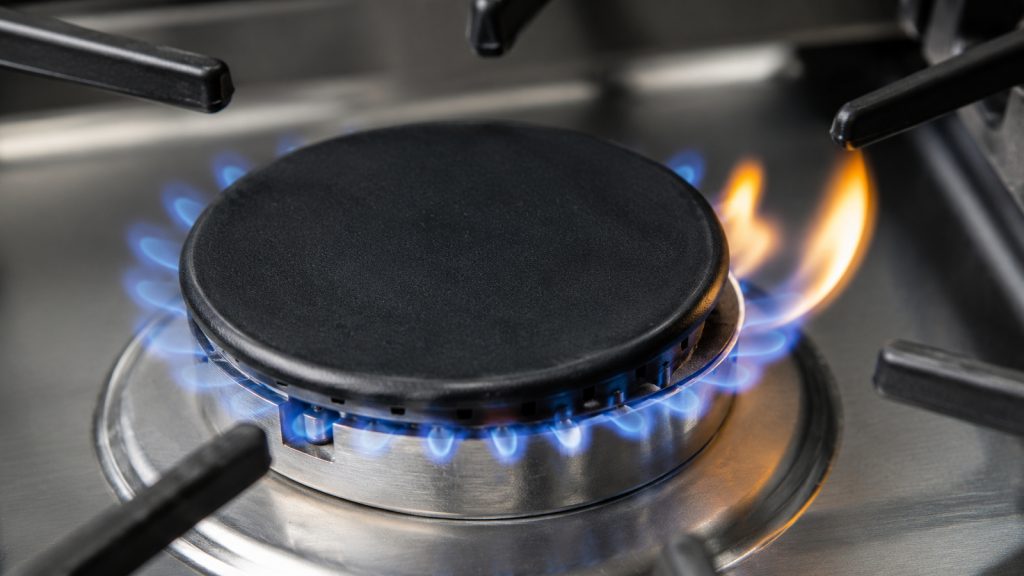
Viking Gas Cooktop Flames Turning Lazy or Yellow
Uneven or yellow Viking cooktop flames often mean dirty ports or misaligned caps — know when supply problems need a pro.
Clicking without flame on a Viking range often means a misseated cap or dirty ports — not an automatic gas valve replacement.

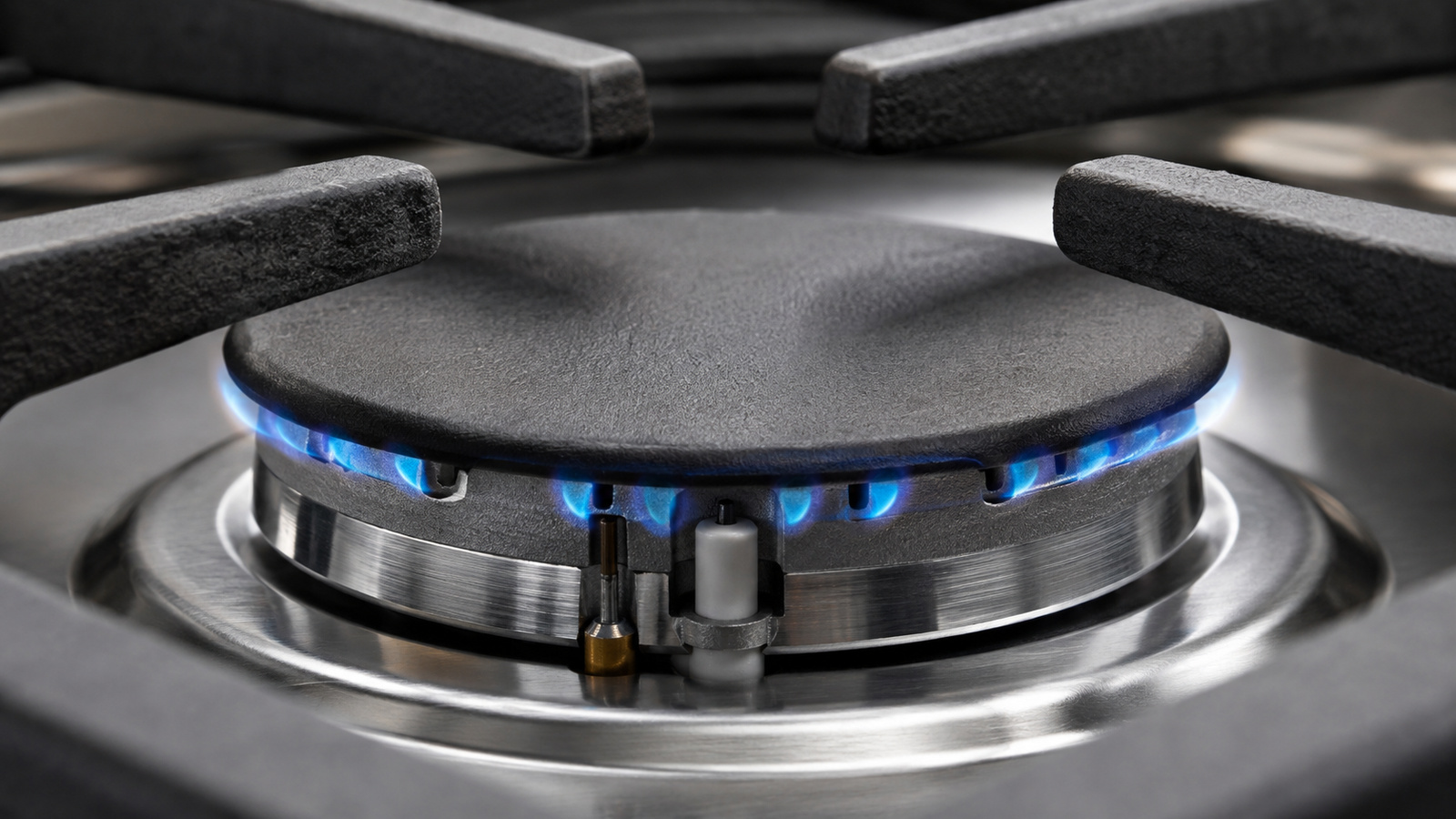
Professional Viking ranges should light with a crisp ignition and a steady blue flame. Clicks without fire, or a single dead burner among working neighbors, frequently trace to a cap that shifted during cleaning or ports clogged with boil-over sugar.
Independent Viking technicians handle valves, igniters, and leak testing. Owners can reseat caps, clean visible ports gently, and confirm the gas supply — then stop if gas odor appears.
With burners cool, lift the grate and confirm each cap sits flat on its base with the alignment features engaged. A tilted cap blocks gas from reaching the igniter tip.
Keep the ceramic igniter dry after mopping spills. Moisture can delay spark until the tip dries.
| Ignition symptom | Likely cause | Safe check |
|---|---|---|
| Click, no flame | Ports blocked or cap tilted | Clean ports; reseat cap |
| Lazy yellow flame | Cap misalignment | Realign base and cap |
| Every burner dead | Supply or module issue | Confirm gas; book service |
Use a soft brush or a straight pin carefully on visible port openings. Do not ream orifices with drill bits — that changes gas metering and creates unsafe flames.
Confirm other gas appliances in the home light normally so you know the street supply is present before blaming the range alone.
Safe to try
Leave to a technician
Leave the area and follow gas-emergency guidance if you smell fuel. Do not keep clicking igniters in a gas-heavy kitchen.
When caps are correct and one burner still will not light — or sparks are absent entirely — schedule independent Viking range service for igniter and valve diagnosis.
Outdoor ranges and grills face wind and moisture. Shield the burner while lighting per the outdoor manual, and dry igniter tips after storms before assuming a failed module.
Most single-burner Viking ignition complaints end with a seated cap and clear ports. Respect gas safety boundaries and bring in independent repair when spark or supply problems remain.
This article covers Viking Range Burner Clicking with practical checks you can run before booking a technician.
Need help now? Visit our services page or contact us.
Official manuals and support notes are available on Viking Range owner support.
Remember: Viking Range Burner Clicking is easier to resolve when you capture the model number and when Viking Range Burner Clicking first appeared.
Write down the full model number before ordering parts. Board and sensor revisions can change which part number is correct.
A single power reset can clear a temporary fault, but repeated returns of the same code usually mean a physical cause remains.
Keep vents and filters clear between visits. Restricted airflow often mimics electrical or sensor failures.
If water, burning smells, or sparking are present, stop using the appliance and arrange a professional inspection.
Delayed ignition from soil or moisture is common. Persistent long clicking needs service to avoid gas build-up.
Other burners may still work, but schedule repair and never ignore gas odors.
Yellow tipping suggests incomplete combustion or blockage. Clean and reseat; if it continues, stop using that burner and call service.
Uneven or yellow Viking cooktop flames often mean dirty ports or misaligned caps — know when supply problems need a pro.
Large Viking cavities and heavy accessories stretch preheat — learn normal ramp times versus a failing heat circuit.
Musty Viking dishwashers usually hide soil in the filter and gasket — clean those before chasing motor failures.
Share a few details and we’ll confirm an appointment. Prefer to talk? Call us and we’ll help right away.
Use the secure scheduler below to request your appointment.