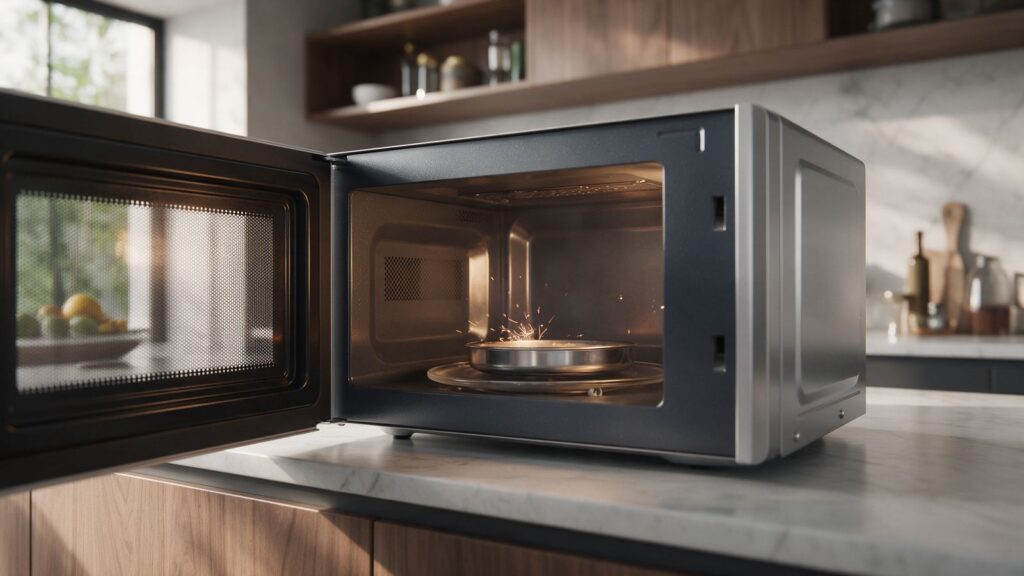
Viking Microwave Arcing or Sparking: What to Stop Using Immediately
Arcing can be caused by inappropriate metal, damaged accessories, heavy food residue, cavity damage, or an internal high-voltage problem. Continuing to run the microwave…
A built-in dishwasher combines water, pumps, heaters, wiring, and controls. Water escaping beyond the intended tub and drain path should be contained before repeated operation.

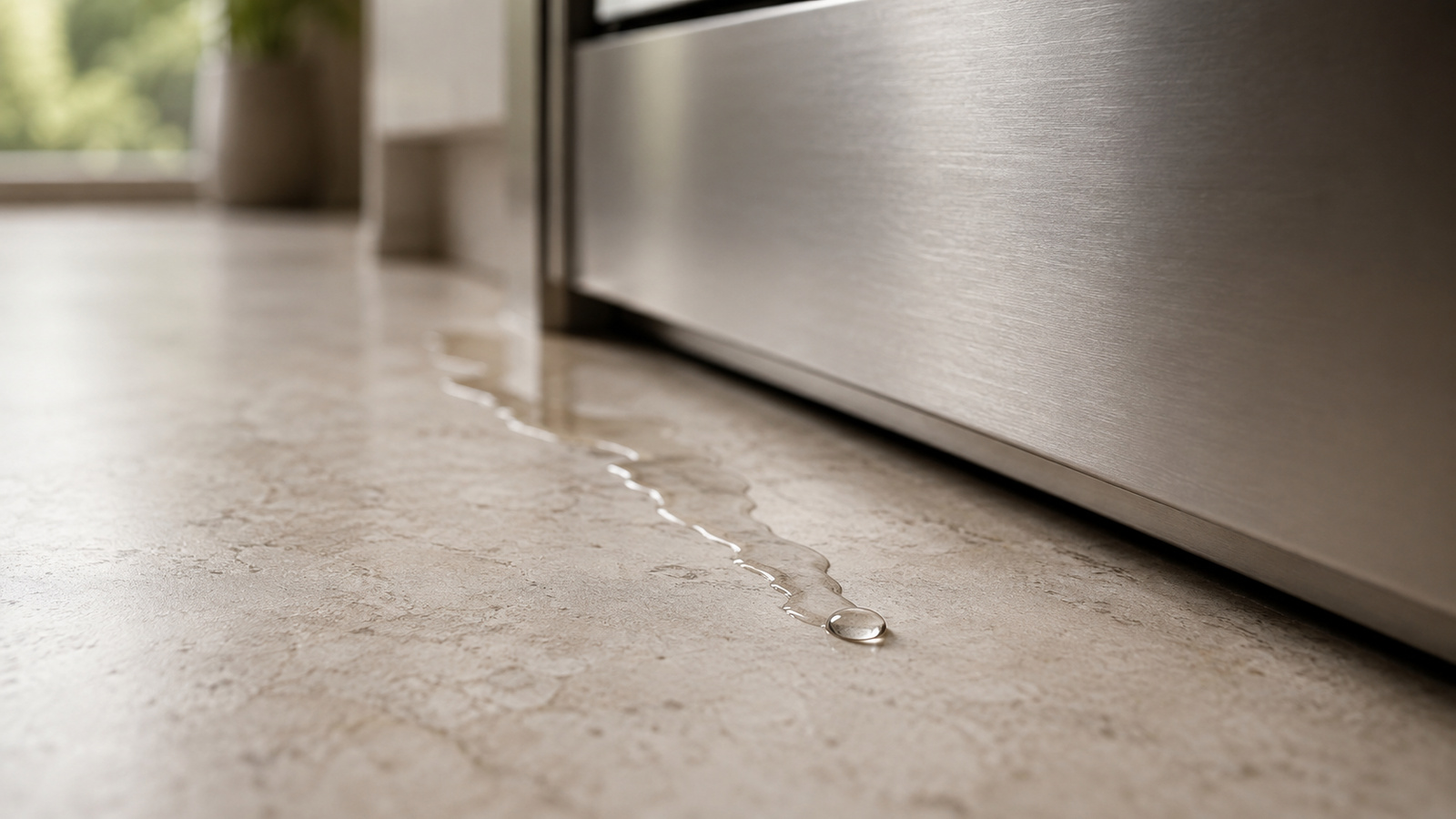
Water around a Viking dishwasher should be treated as a possible electrical risk once it reaches the floor, cabinet, or any wiring. Stop the cycle, shut the dishwasher’s water supply if you can reach it safely, and keep the machine off until the source is found and the area is dry.
A built-in dishwasher combines water, pumps, heaters, wiring, and controls. Water escaping beyond the intended tub and drain path should be contained before repeated operation.
| Symptom | What it can point to | What you can safely check |
|---|---|---|
| Water at the door during a cycle | Door or seal issue, or overfilling | Stop the cycle and look at the visible door edge without reaching inside |
| E:01 flashing | Too much water or leakage detected | Stop and follow this page’s safety steps |
| Water under the unit with no cycle running | Supply or drain connection issue | Shut off the supply valve and keep the unit off |
| Water standing in the tub after a cycle | Clogged filters or blocked discharge hose | Clean the filters; check the hose for kinks |
| Water near an outlet or junction box | An electrical hazard | Keep the dishwasher off and stay clear |
Viking dishwashers are built-in systems where loading, filtration, household water/drain conditions, circulation, heating, sensing and controls all affect the cycle. The cycle stage is useful evidence.
The manual for the Viking dishwashers says E:01 flashes when the machine takes in too much water or detects leakage. The machine tries to discharge water, and E:01 clears if the overflowing stops. A message that stays on is described as a permanent fault, and the manual says to contact service. That message is different from E:02, which relates to a cut water supply.
If water reaches a junction box, outlet, wiring, or control area, keep the dishwasher off until the leak source and electrical safety are addressed.
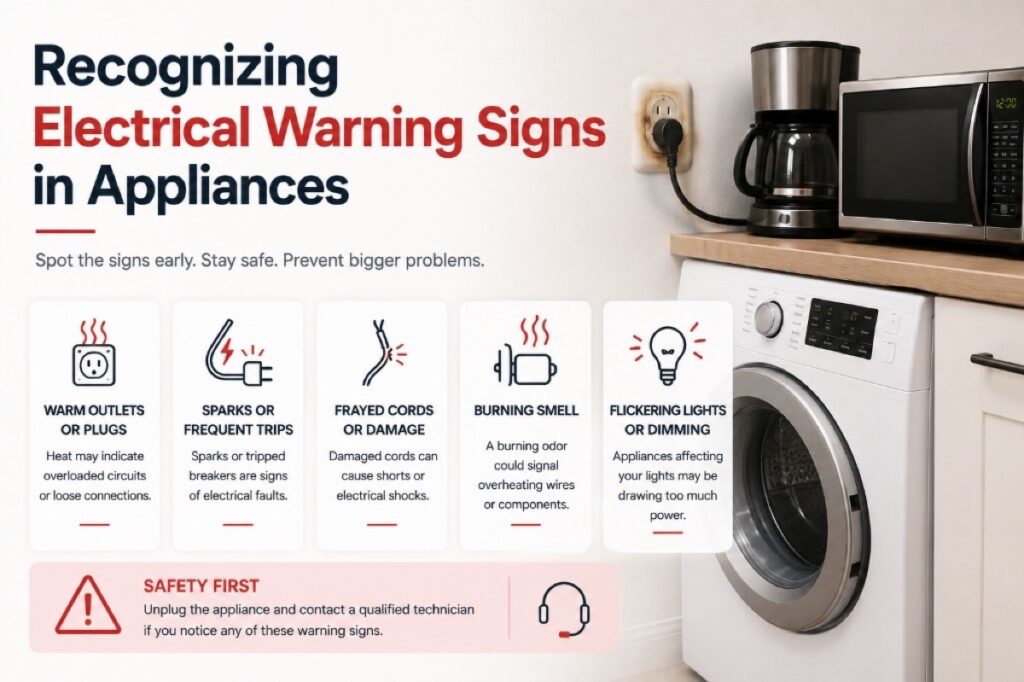
Stop normal operation for smoke, sparking, burning electrical odor, repeated breaker trips, persistent gas odor, uncontrolled overheating, water contacting electrical connections or other clear fire/gas/electrical/flooding hazards.
Do not bypass safety devices or perform live electrical, internal gas, sealed-refrigeration, induction-power or microwave high-voltage work.
Not all water is a leak. Water left in the tub at the end of a program is listed in the manual as a drain symptom, with clogged filters and a blocked discharge hose as causes. Water outside the tub is a different situation, and water that reaches the floor or cabinet is the case that has to be treated as potentially electrical.
After shutting off the supply and keeping the unit off, dry only what you can reach safely. Do not run the dishwasher to see whether the leak repeats. Reaching into the toe-kick area or the cabinet to trace a leak puts you near wiring.
Write down:
Those details reduce repeated owner checks and help the technician choose a focused diagnostic path.
E:01 and E:02 come from the Viking dishwasher manuals and apply to those lines. Viking publishes no numeric error-code table for its gas ranges, so messages from other appliances should not be applied here.
Leave heavy professional ranges, built-in refrigerators, wall ovens, undercounter products and tightly installed appliances in place unless the service team specifically requests access. Moving an appliance without a plan can disturb flooring, cabinetry, anti-tip hardware, gas, electrical, water, drain or ventilation connections.
For condos, high-rises, gated properties and custom kitchens, include loading, elevator, shutoff, parking and clearance information when booking.
Do not clear a useful code before recording it. Do not order a part because another Viking owner described a similar symptom. Do not apply an oven F-code meaning to a refrigeration or dishwasher platform without verification.
One controlled owner-level check is useful when it answers a question. Repeated resets and panel removal usually remove evidence instead of adding it.
For adjacent symptoms, read Viking Dishwasher Not Draining: Standing Water Has a Sequence and Viking Dishwasher Repair Cost: Drain, Leak, Wash, Heat, or Controls?.
Should I keep resetting the Viking appliance if it starts working again? Use one normal model-approved restart when appropriate and record any code first. If the same condition returns, repeated resets are not a repair.
Should I buy a part from the symptom or F-code alone? Usually no. Similar symptoms can come from different components, installation conditions or utility problems.
Can I remove panels to inspect wiring, gas parts or controls? No. Keep homeowner checks external and model-appropriate.
Why does the full model number matter? Viking has multiple product series and generations. Exact model identity helps prevent the wrong technical path.
Should I keep running the dishwasher to find the leak? No. Running it moves more water to places that may contain wiring. Stop the cycle, shut the supply if safe, and keep the unit off until the source is addressed.
What does E:01 mean? On the Viking dishwasher manuals, E:01 flashes when the machine takes in too much water or detects leakage. If it does not clear after the overflowing stops, the manual calls it a permanent fault that needs service.
Can water on the floor affect the electrical side? It can. If water reaches an outlet, a junction box, wiring, or the control area, keep the dishwasher off and arrange evaluation before using it again.
Arcing can be caused by inappropriate metal, damaged accessories, heavy food residue, cavity damage, or an internal high-voltage problem. Continuing to run the microwave…
A breaker that repeatedly trips is doing safety work. Depending on the appliance, the cause can be household wiring, moisture, heaters, motors, compressor/start hardware,…
A locked oven door after self-clean is a high-temperature safety condition first. The latch should not be forced while the cavity or lock system…
Share a few details and we’ll confirm an appointment. Prefer to talk? Call us and we’ll help right away.