Viking Wine Cellar Not Cooling: Temperature Drift Has More Than One Cause
A Viking wine cellar can drift because of door sealing, loading, room conditions, ventilation, fans, sensors, controls, or the refrigeration system. One display reading…
Uneven baking can come from cookware, rack position, door opening, convection airflow, temperature calibration, an element or burner/igniter condition, sensing, or controls. One disappointing tray is not enough to…

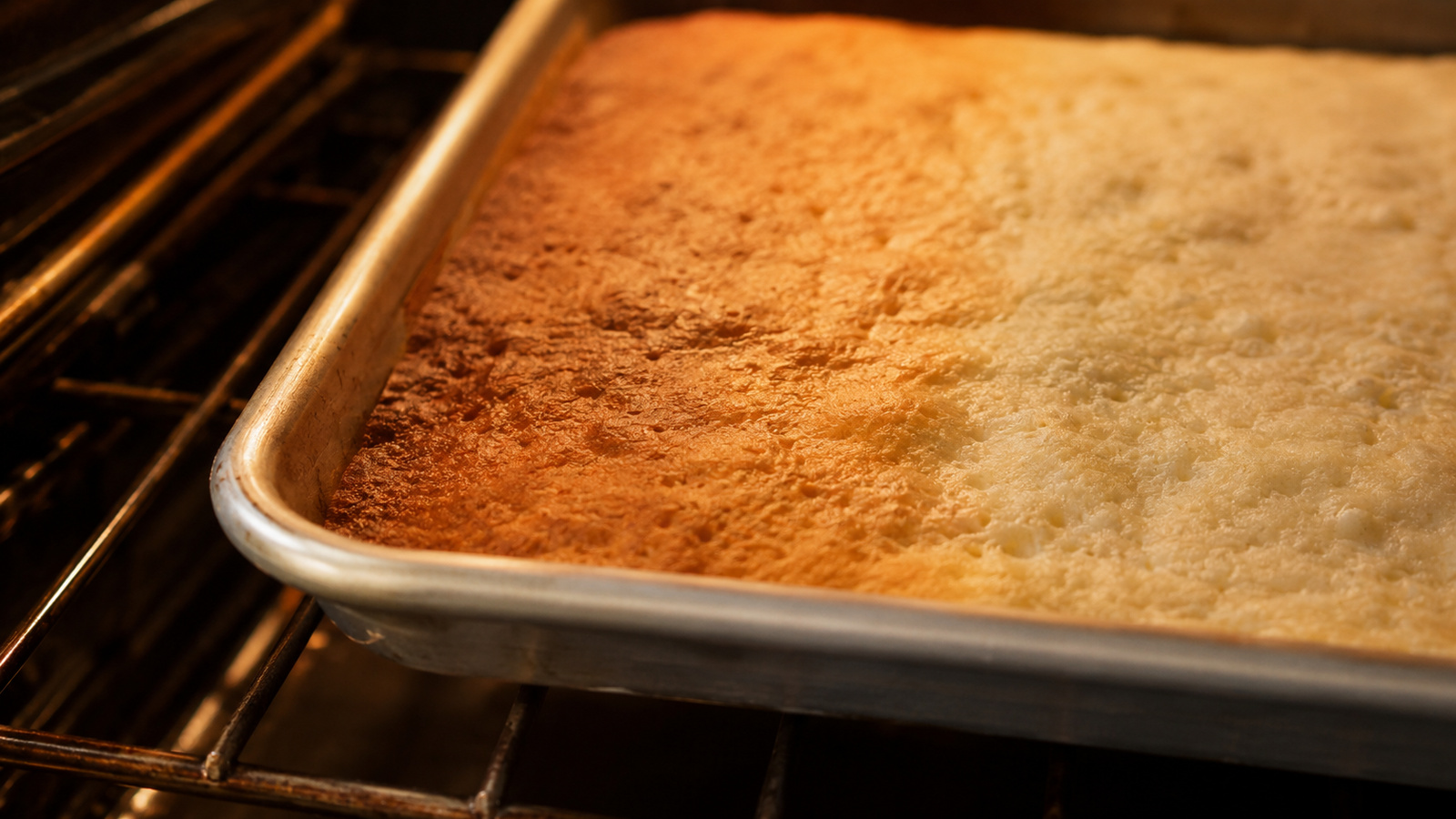
Uneven baking in a Viking oven often traces to rack position, pan type, crowding or an unlevel oven before it points to a heating part. Run one controlled test with the same pan on the same rack and see whether the hot or cool area repeats; a pattern that repeats after the manual’s basics are ruled out is the point to book a diagnosis.
Uneven baking can come from cookware, rack position, door opening, convection airflow, temperature calibration, an element or burner/igniter condition, sensing, or controls. One disappointing tray is not enough to identify a failed part.
Change one condition at a time. Resetting power, changing settings, cleaning multiple systems and moving the appliance all at once can erase evidence.
| Symptom | What it can point to | What you can safely check |
|---|---|---|
| Bottoms brown while tops stay pale | Rack position or dark pans | Use rack 2 or 3 for large flat pans |
| Crowded trays bake differently from each other | Too many pans, or less than 1 to 2 inches of air space around each | Bake with fewer pans and leave space around each |
| Pans bake unevenly regardless of rack | Warped, dented, stainless steel and tin-coated pans heat unevenly | Try a flat, undamaged pan |
| One side keeps finishing first | The oven or rack is not level | Check the rack and the oven level |
| Convection preheat feels long | TruConvec preheat waits for all racks; a colder room or a supply below 240 VAC lengthens it | Compare with BAKE preheat |
| Gas oven indicator lit but the oven is not heating | The manual lists this as normal cycling | Wait for heating to resume |
Viking ovens and range ovens may use bake, broil and convection functions with model-specific heating, fan, sensing and control architecture. Identify the exact cavity and mode.
The oven has six rack positions numbered from the bottom. Three-rack baking uses positions 2, 3, 4 and 5, two-rack baking uses 2 and 4 or 3 and 5, and large flat pans do best in rack 2 or 3. The baking chart in the manual also lists an oven that was not preheated, too many pans and a door opened too often among the causes of uneven results.
Use a single sheet on one rack for the test so the result is easy to read. If the same corner browns first again, that repeat is useful evidence.
A symptom identifies a system to investigate; it does not identify one replacement part. Installation, utilities, sensors, wiring, airflow, mechanical components, controls and the appliance’s heating or refrigeration system can create similar outward behavior.
Preheat is mode-specific on the Rapid Ready system. Convection preheat to 350F normally takes slightly longer than BAKE because every rack must reach temperature, and a significantly colder room or low supply voltage lengthens it further. Starting a tray before the oven is ready can mimic a heating fault.
When comparing modes, change only the mode. Using a different pan or rack at the same time makes the result impossible to interpret.
If the same pattern repeats, service testing may need to compare heating components, convection fans, temperature sensors, door sealing, relays, and control output.
Write down:
Those details reduce repeated owner checks and help the technician choose a focused diagnostic path.
Leave heavy professional ranges, built-in refrigerators, wall ovens, undercounter products and tightly installed appliances in place unless the service team specifically requests access. Moving an appliance without a plan can disturb flooring, cabinetry, anti-tip hardware, gas, electrical, water, drain or ventilation connections.
For condos, high-rises, gated properties and custom kitchens, include loading, elevator, shutoff, parking and clearance information when booking.
Do not clear a useful code before recording it. Do not order a part because another Viking owner described a similar symptom. Do not apply an oven F-code meaning to a refrigeration or dishwasher platform without verification.
One controlled owner-level check is useful when it answers a question. Repeated resets and panel removal usually remove evidence instead of adding it.
For adjacent symptoms, read Viking Gas Burner Keeps Clicking: Moisture, Burner Position, or Ignition Hardware? and Viking Professional Range Repair Cost: Ignition, Heating, Controls, or Access?.
Should I keep resetting the Viking appliance if it starts working again? Use one normal model-approved restart when appropriate and record any code first. If the same condition returns, repeated resets are not a repair.
Should I buy a part from the symptom or F-code alone? Usually no. Similar symptoms can come from different components, installation conditions or utility problems.
Can I remove panels to inspect wiring, gas parts or controls? No. Keep homeowner checks external and model-appropriate.
Why does the full model number matter? Viking has multiple product series and generations. Exact model identity helps prevent the wrong technical path.
Which rack should I use for large flat pans in a Viking oven? The manual recommends rack position 2 or 3 for large flat pans, with 1 to 2 inches of air space around each pan for even circulation.
Why is convection preheat slower in my Viking oven? Convection preheat waits for all racks to reach temperature, so it normally takes slightly longer than BAKE preheat to 350F, according to the manual.
Can old pans cause uneven baking? Yes. The manual lists warped, dented, stainless steel and tin-coated pans as heating unevenly, and dark pans as a cause on its baking chart.
A Viking wine cellar can drift because of door sealing, loading, room conditions, ventilation, fans, sensors, controls, or the refrigeration system. One display reading…
Weak capture can come from grease-loaded filters, blocked intake areas, duct resistance, a stuck exterior damper, insufficient make-up air, blower hardware, or controls. A…
A Viking burner that keeps clicking can be reacting to moisture, a mis-seated cap, debris around the igniter, a switch condition, wiring, or ignition…
Share a few details and we’ll confirm an appointment. Prefer to talk? Call us and we’ll help right away.