Viking Range Hood Is Noisy: Separate Filter, Vibration, Duct, and Blower Clues
A rattle, hum, howl, or vibration can come from a loose filter, user-accessible trim, duct resonance, a damper, accumulated grease, blower hardware, or motor/control…
A dispenser problem can come from household supply, filter condition, tubing, a frozen section of the water path, a valve, door sensing, controls, or the dispenser interface. Start outside the appliance and work inward.

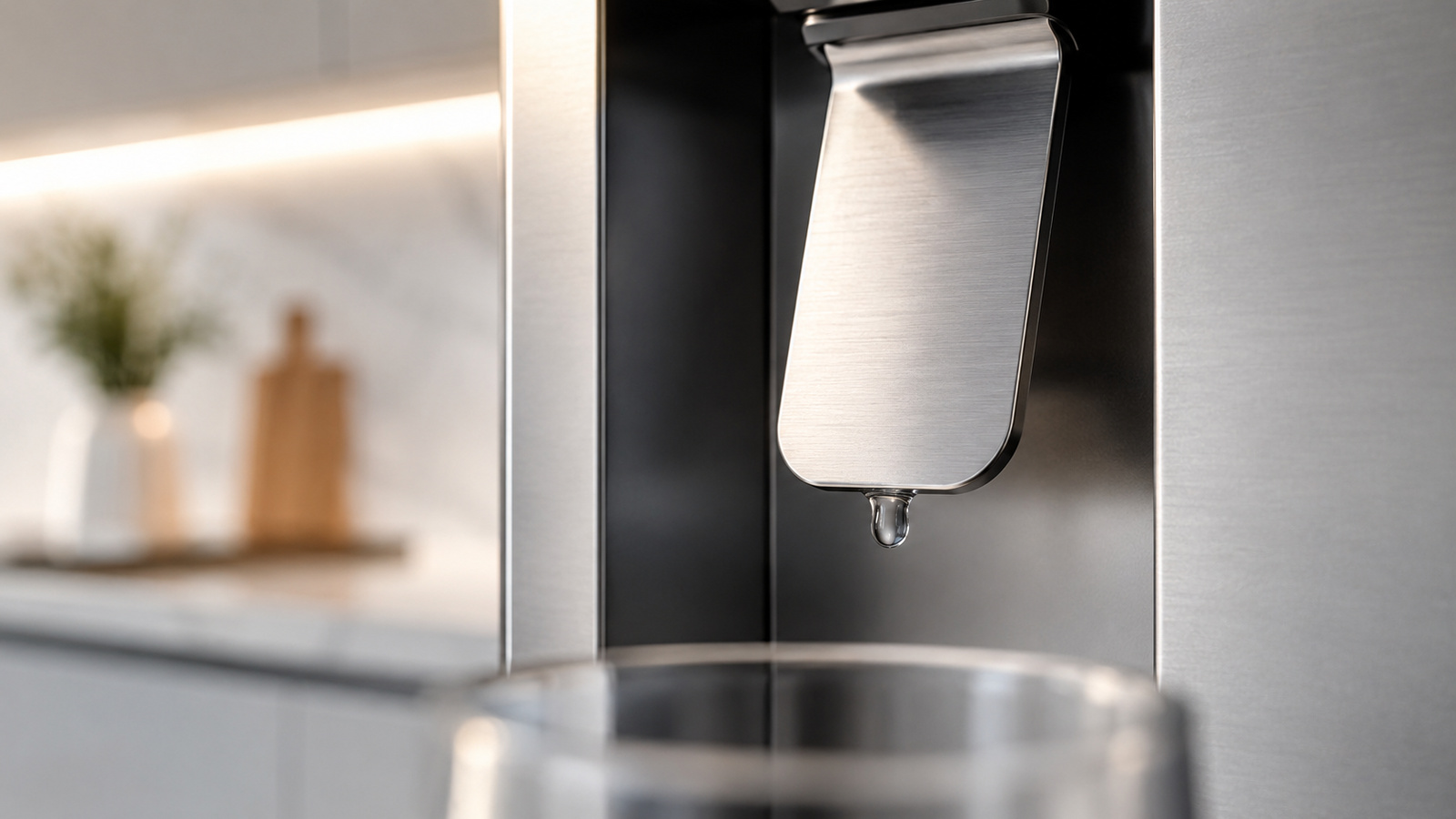
When a Viking refrigerator dispenser stops delivering water, the cause can sit upstream of the dispenser: the household supply, a kinked line, low pressure, or a filter that is clogged or not seated. Work from the wall valve inward, and book service if flow does not return once those outside conditions are right.
A dispenser problem can come from household supply, filter condition, tubing, a frozen section of the water path, a valve, door sensing, controls, or the dispenser interface. Start outside the appliance and work inward.
Confirm the household water supply is open.
Check whether a recent filter change affected flow.
Compare ice-maker water behavior where the model shares part of the supply path.
| Symptom | What it can point to | What you can safely check |
|---|---|---|
| No water and the ice maker is also quiet | Shared supply or valve problem | Confirm the household valve is open and the line is not kinked |
| Flow dropped after a filter change | Filter clogged or misinstalled | Reseat the filter per the manual |
| Weak flow with a reverse osmosis system | Reduced water pressure | Check that pressure meets the manual minimum |
| Dispenser stops after a long pour | Built-in time limit | Release and start again |
| Water not very cold | Dispensed water is chilled only to a limit | Compare with the manual’s stated temperature |
Viking refrigeration spans built-in, integrated, freestanding, undercounter and related ice/water systems. Exact model identity, cabinet ventilation, door alignment and refrigeration platform matter before technical information is applied.
Water reaches the dispenser through the household valve, the supply line, the filter, and the refrigerator’s internal valve and tubing. The manual for one Viking freestanding French door model lists the checks for a dispenser that is not operating: supply valve open, a kinked line, water pressure of at least 35 psi, a clogged or misinstalled filter, the door closed, and reverse osmosis lowering pressure.
The same manual says the dispenser runs five seconds on and five seconds off, and stops after five minutes of continuous dispensing. It also says water is chilled only to about 50F. After installation the manual calls for flushing 4 gallons through the system. On the 7 Series, the FILTER button lights when the filter is due.
If external supply and normal owner checks are correct but flow does not return, valves, tubing, sensing, wiring, or controls may need service.
If the ice maker works but the dispenser does not, the shared supply is less likely to be the issue. The ice maker manual lists its own checks: ice function on, arm down, water valve open, water reaching the valve, and no line leaks. Raising the arm stops ice production, so a lifted arm explains a missing batch without explaining a missing pour. Each model differs, so use the manual for your own refrigerator.
Record the complete model number and exact display before resetting power. Similar-looking Viking F-codes or messages can require different interpretation by appliance family and model.
Write down:
Those details reduce repeated owner checks and help the technician choose a focused diagnostic path.
The 7 Series integrated refrigerator lists its alarm codes as High Temperature, Water Filter, Open Door after 3 minutes, long-term power loss, a Bluezone bulb indicator, and Clean Condenser Coil. A lit Water Filter alarm is a filter reminder, not a failure code.
Leave heavy professional ranges, built-in refrigerators, wall ovens, undercounter products and tightly installed appliances in place unless the service team specifically requests access. Moving an appliance without a plan can disturb flooring, cabinetry, anti-tip hardware, gas, electrical, water, drain or ventilation connections.
For condos, high-rises, gated properties and custom kitchens, include loading, elevator, shutoff, parking and clearance information when booking.
Do not clear a useful code before recording it. Do not order a part because another Viking owner described a similar symptom. Do not apply an oven F-code meaning to a refrigeration or dishwasher platform without verification.
One controlled owner-level check is useful when it answers a question. Repeated resets and panel removal usually remove evidence instead of adding it.
For adjacent symptoms, read Viking Refrigerator Not Cooling: Separate Door, Airflow, and Refrigeration Clues and Viking Wine Cellar Not Cooling: Temperature Drift Has More Than One Cause.
Should I keep resetting the Viking appliance if it starts working again? Use one normal model-approved restart when appropriate and record any code first. If the same condition returns, repeated resets are not a repair.
Should I buy a part from the symptom or F-code alone? Usually no. Similar symptoms can come from different components, installation conditions or utility problems.
Can I remove panels to inspect wiring, gas parts or controls? No. Keep homeowner checks external and model-appropriate.
Why does the full model number matter? Viking has multiple product series and generations. Exact model identity helps prevent the wrong technical path.
Why did my Viking dispenser stop after I changed the filter? The manual for one model lists a clogged or misinstalled filter as a cause of a dispenser that is not operating. Reseat the filter exactly as the manual shows before assuming a valve problem.
Why does the dispenser shut off during a long pour? On one Viking French door manual, it stops after five minutes of continuous dispensing. Letting go and pressing again resumes normal operation.
Does a reverse osmosis system affect the dispenser? It can. The manual lists reverse osmosis lowering water pressure as a cause of poor flow, and it names a minimum pressure of 35 psi for the dispenser.
A rattle, hum, howl, or vibration can come from a loose filter, user-accessible trim, duct resonance, a damper, accumulated grease, blower hardware, or motor/control…
Oven temperature normally cycles above and below the setpoint. One quick thermometer reading can make normal cycling look like a calibration problem, so use…
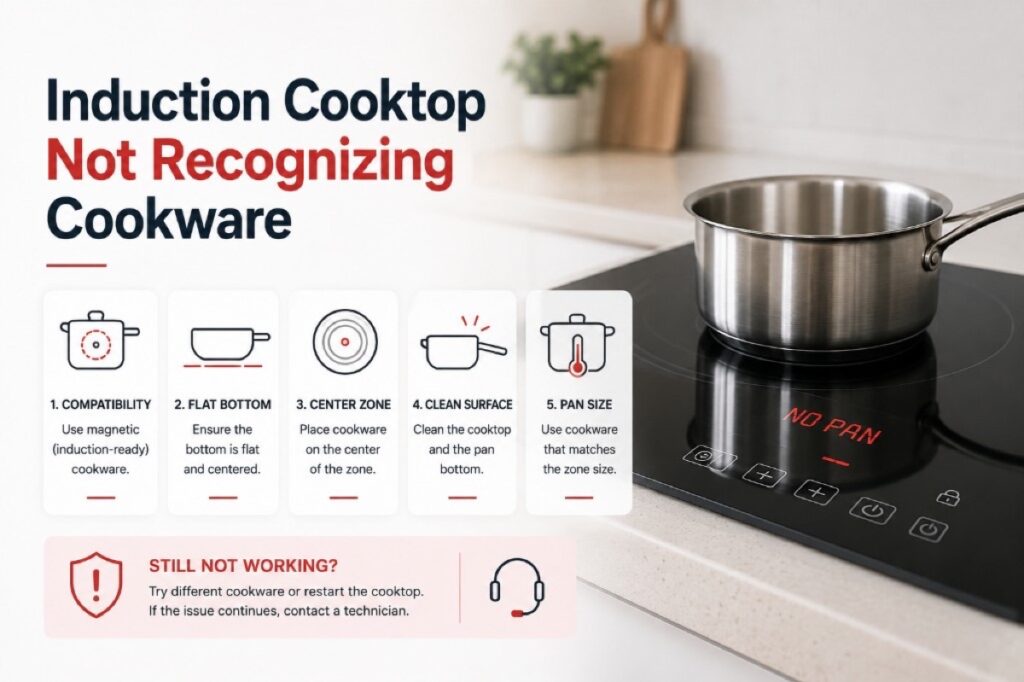
An induction zone needs magnetic cookware of an appropriate base size and position. A cookware issue can look exactly like a dead zone until…
Share a few details and we’ll confirm an appointment. Prefer to talk? Call us and we’ll help right away.