Viking Range Hood Is Noisy: Separate Filter, Vibration, Duct, and Blower Clues
A rattle, hum, howl, or vibration can come from a loose filter, user-accessible trim, duct resonance, a damper, accumulated grease, blower hardware, or motor/control…
Oven temperature normally cycles above and below the setpoint. One quick thermometer reading can make normal cycling look like a calibration problem, so use a repeatable test before changing settings.

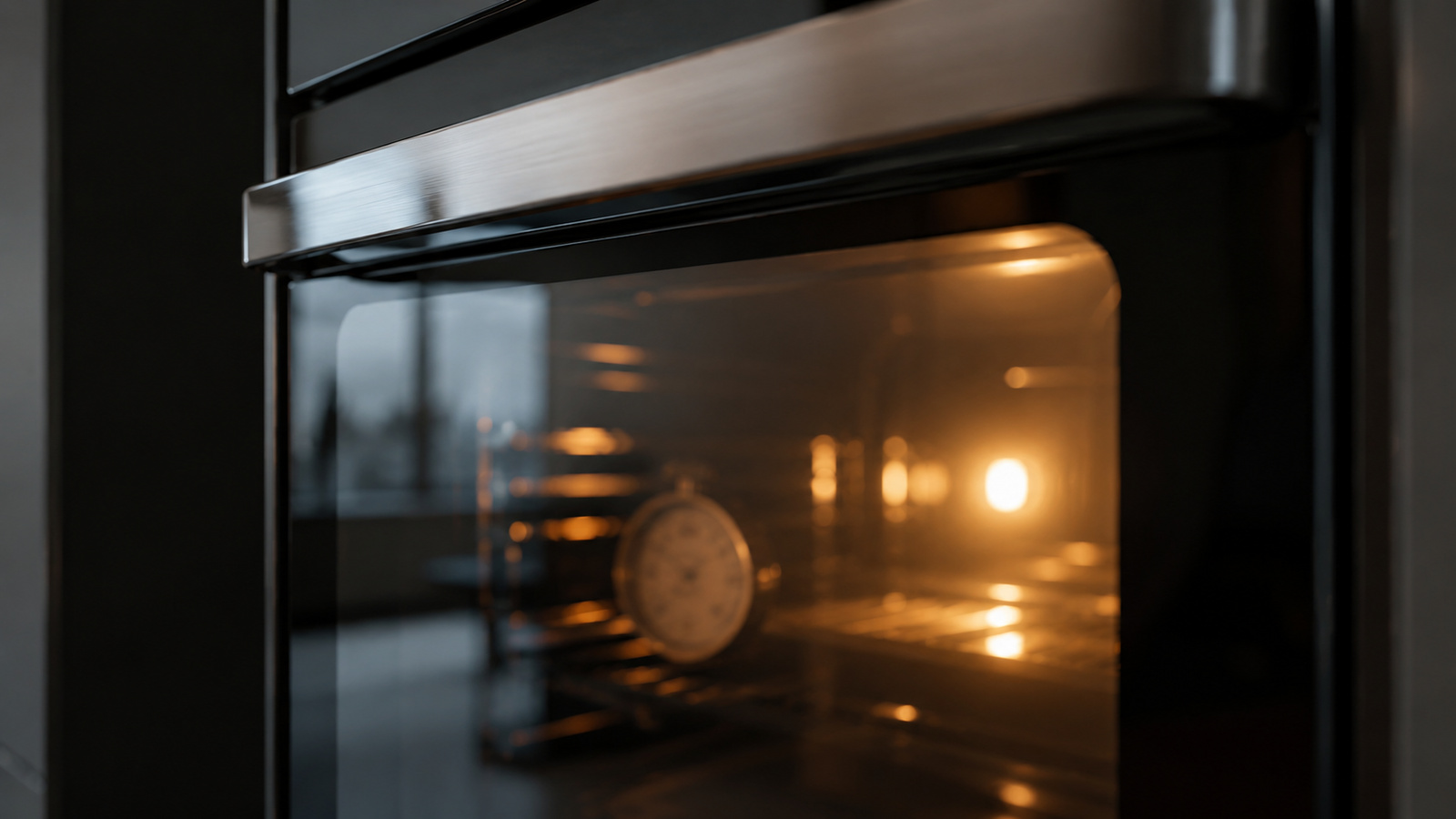
An oven that seems to run hot or cold is often just cycling around its setpoint, so one quick thermometer reading proves little. Preheat fully in one mode, keep the door shut, take several readings from the same rack, and judge the average; only a steady offset or a pattern that appears in one mode is worth a service visit.
Oven temperature normally cycles above and below the setpoint. One quick thermometer reading can make normal cycling look like a calibration problem, so use a repeatable test before changing settings.
Preheat fully using the same mode each time.
Keep the door closed and measure from a consistent rack position.
Take multiple readings over a stable period and compare the average.
| Symptom | What it can point to | What you can safely check |
|---|---|---|
| Reading swings above and below the setpoint | Normal heating cycles | Average several readings taken with the door closed |
| Food browns too slowly right after preheating | Preheat not finished, or a mode that preheats longer | Wait for full preheat and use the same mode for each test |
| Gas oven indicator is on but heat seems to stop | Cycling, which the manual lists as normal | Give it time to cool and resume before concluding anything |
| Results differ between baking and convection | A mode-specific issue, or different rack and pan setups | Repeat the test in one mode with one rack position |
| Same average offset every time | A consistent difference that the model’s own guidance addresses | Check your manual for the calibration instructions |
Viking ovens and range ovens may use bake, broil and convection functions with model-specific heating, fan, sensing and control architecture. Identify the exact cavity and mode.
A thermometer placed near the door, a rack edge, or the heating area can read differently from the middle of the cavity. Opening the door to look also drops the temperature quickly. Use the same spot and the same rack each time, so the only variable in the test is the oven.
The manual for Viking electric ovens with the Rapid Ready system says a convection preheat to 350F normally takes slightly longer than a bake preheat to the same temperature, because all of the racks must reach temperature. It also says preheat lengthens in a significantly colder room or when the power supply is below 240 VAC. A slow preheat in one mode is therefore not automatically a failing element.
If the average remains consistently offset, use the exact model’s calibration guidance; if the pattern is unstable or mode-specific, sensing, heating, airflow, relays, or controls may need service.
Viking’s baking troubleshooting chart lists the wrong rack position, an oven that was not preheated, dark pans, too many pans, an oven or rack that is not level, and a door opened too often. Warped, dented, stainless steel and tin-coated pans heat unevenly. Leave 1 to 2 inches of air space around each pan, and use rack 2 or 3 for large flat pans.
Clearing those variables first means a remaining offset is a real result. Repeat the average test with an empty oven and a single rack before deciding that sensing or controls are involved.
Record the complete model number and exact display before resetting power. Similar-looking Viking F-codes or messages can require different interpretation by appliance family and model.
Write down:
Those details reduce repeated owner checks and help the technician choose a focused diagnostic path.
Viking publishes no numeric error-code table for its gas ranges and ovens. The manual for one 7 Series gas range says error codes appear with a red backlight and a set number of flashes around the knob rings, but the code list is not in the user manual. If your oven shows a pattern, describe exactly what it did rather than guessing a meaning.
Leave heavy professional ranges, built-in refrigerators, wall ovens, undercounter products and tightly installed appliances in place unless the service team specifically requests access. Moving an appliance without a plan can disturb flooring, cabinetry, anti-tip hardware, gas, electrical, water, drain or ventilation connections.
For condos, high-rises, gated properties and custom kitchens, include loading, elevator, shutoff, parking and clearance information when booking.
Do not clear a useful code before recording it. Do not order a part because another Viking owner described a similar symptom. Do not apply an oven F-code meaning to a refrigeration or dishwasher platform without verification.
One controlled owner-level check is useful when it answers a question. Repeated resets and panel removal usually remove evidence instead of adding it.
For adjacent symptoms, read Viking Oven Bakes Unevenly: Test the Pattern Before Replacing a Heating Part and Viking Gas Burner Keeps Clicking: Moisture, Burner Position, or Ignition Hardware?.
Should I keep resetting the Viking appliance if it starts working again? Use one normal model-approved restart when appropriate and record any code first. If the same condition returns, repeated resets are not a repair.
Should I buy a part from the symptom or F-code alone? Usually no. Similar symptoms can come from different components, installation conditions or utility problems.
Can I remove panels to inspect wiring, gas parts or controls? No. Keep homeowner checks external and model-appropriate.
Why does the full model number matter? Viking has multiple product series and generations. Exact model identity helps prevent the wrong technical path.
How long should a Viking oven take to preheat? There is no single answer. Preheat depends on the mode, the room, and the power supply, and on one Viking manual a convection preheat to 350F takes slightly longer than a bake preheat. Compare the same mode on different days before calling a slow preheat a fault.
Why is the oven light on but the gas oven not heating? Viking’s manual for one gas range lists an oven indicator light that is on with no heating as normal cycling, and heating resumes after the oven cools. If the oven stays cold with the indicator on for a long stretch, note it and book a diagnosis.
Should I change the oven setting after one thermometer reading? No. Take several readings over a stable period and average them first, because normal cycling can make a single reading look like a calibration error.
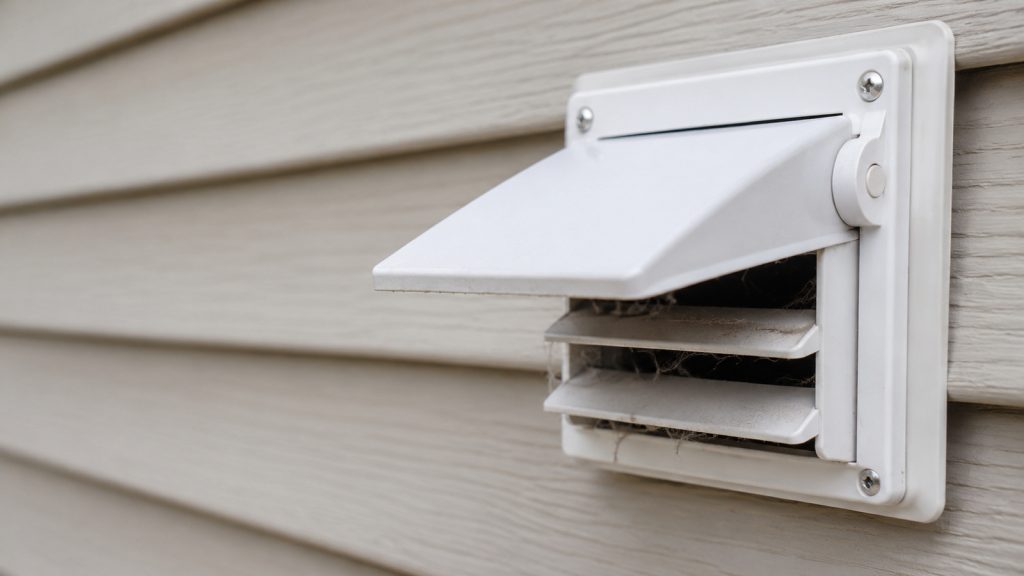
A rattle, hum, howl, or vibration can come from a loose filter, user-accessible trim, duct resonance, a damper, accumulated grease, blower hardware, or motor/control…
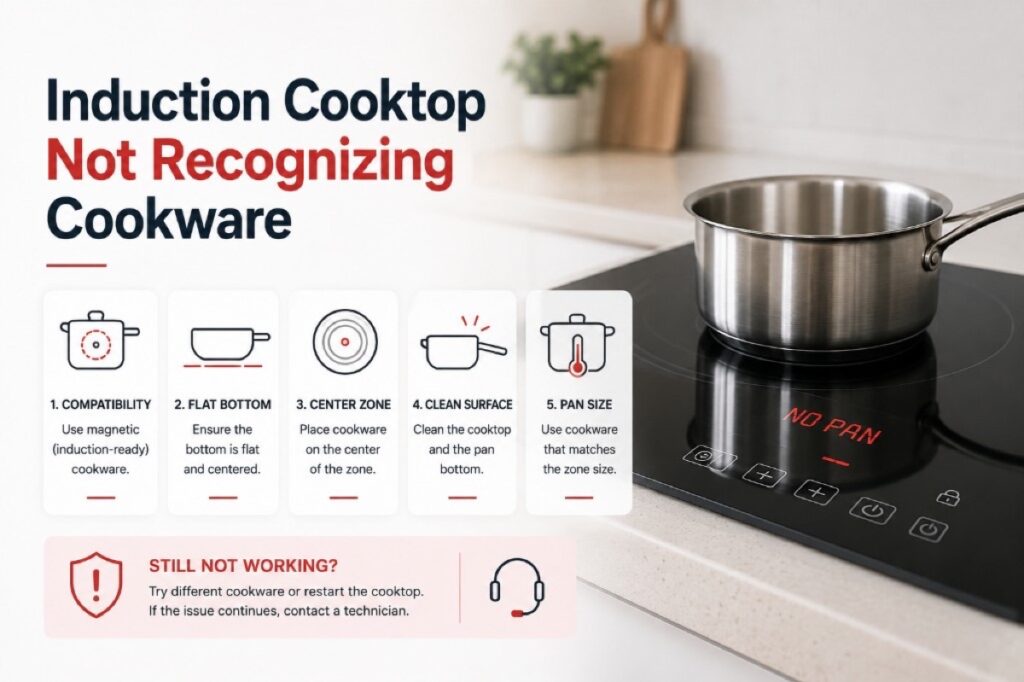
An induction zone needs magnetic cookware of an appropriate base size and position. A cookware issue can look exactly like a dead zone until…
A dishwasher that starts without enough water needs the household supply and door/start conditions checked before an inlet valve or control is blamed.
Share a few details and we’ll confirm an appointment. Prefer to talk? Call us and we’ll help right away.