Keeping a Viking hood or downdraft effective is mostly a matter of filter habits: clean baffle and mesh filters at least monthly, replace charcoal filters on recirculating hoods every 6 to 12 months, and run the hood before and after cooking. If noise or weak capture continues with clean filters, the duct path or blower deserves a look.
A Viking hood or downdraft can become louder and less effective when filters load with grease or the duct path develops resistance. Airflow should be checked before the blower is blamed.
A Practical Maintenance Routine
- Clean or replace user-serviceable filters on the model-appropriate schedule.
- Keep intake openings free of grease and stored objects.
- Compare airflow before and after filter service at the same fan setting.
| Symptom |
What it can point to |
What you can safely check |
| Baffle or mesh filter |
Grease buildup that adds resistance and noise |
Wash at least monthly, more often with frying or wok cooking |
| Charcoal filter (recirculating hood) |
Saturated filter that cannot be cleaned |
Replace every 6 to 12 months; it is not dishwasher-safe |
| Downdraft filter light |
Hours-of-use reminder |
Service the filter, then use the reset button |
| Hood runs loud during hot cooking |
Heat sensor moving the blower to full power |
Compare against the sensor behavior described in the manual |
| Weak capture on a downdraft |
Top glass, suction opening, make-up air, or duct |
Work through the manual’s list of extraction checks |
Viking-Specific Context
Viking ventilation includes wall/chimney/ceiling hoods, custom ventilator systems and downdrafts. Filters, blower operation, duct resistance, dampers and make-up air all affect capture and noise.
Maintenance should preserve normal sealing, airflow, water flow, drainage, loading, filtration, ventilation and user-accessible cleanliness.
How should you clean filters on each Viking hood type?
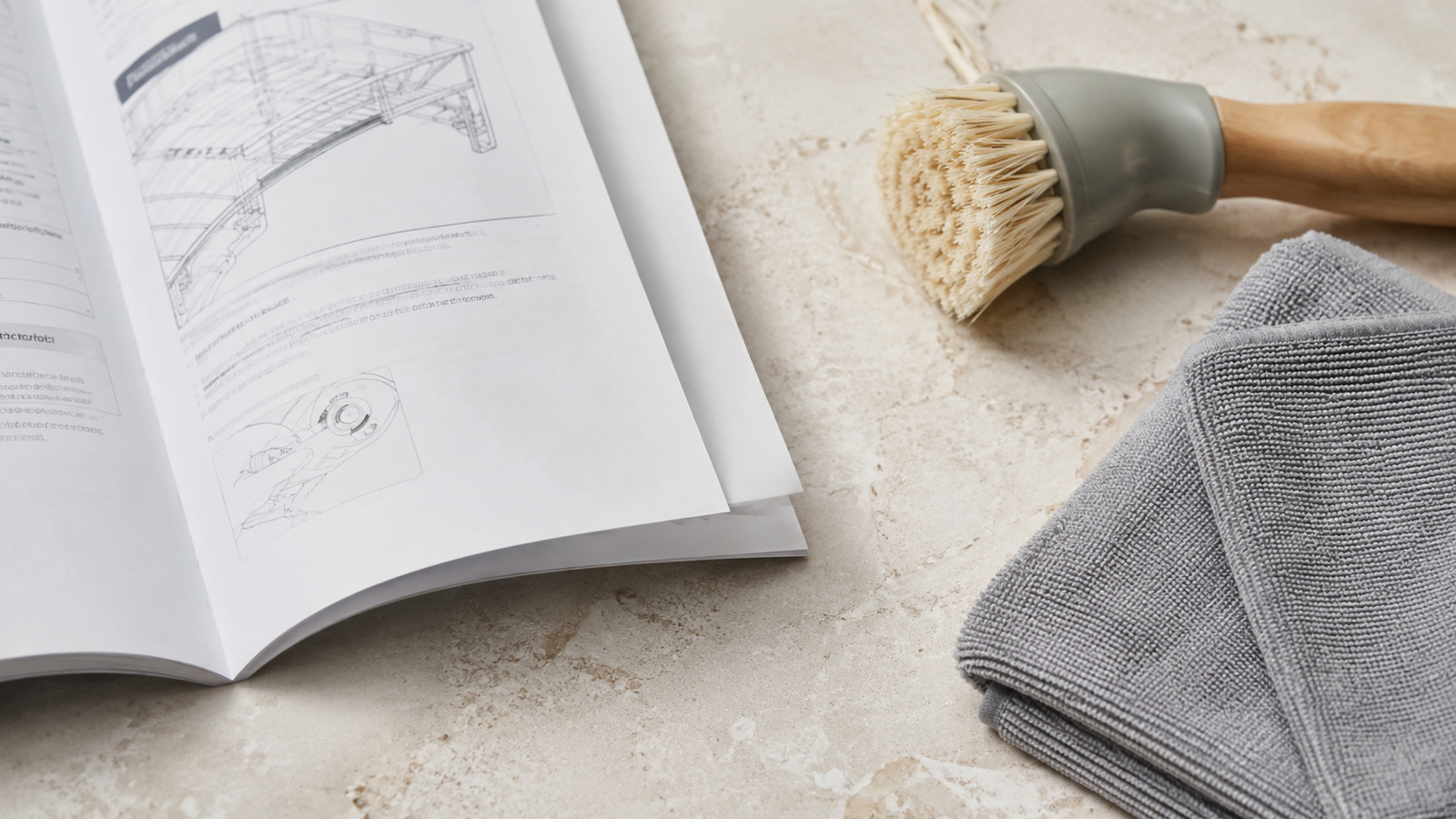
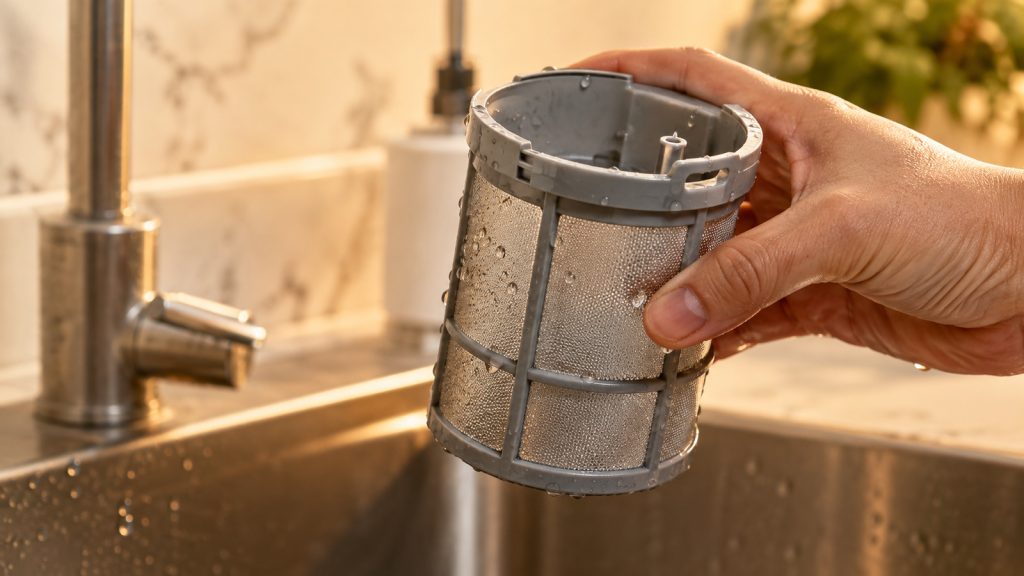
Viking’s owner FAQ says the dishwasher-safe baffle and mesh filters should be cleaned at least once a month, and more for frequent frying or wok cooking. The manual for one 5 Series hood says to wash baffle filters in the dishwasher or in hot soapy water without caustic detergent, and not to disassemble them. Recirculating hoods use disposable charcoal filters, replaced every 6 to 12 months, which cannot go in the dishwasher. The downdraft filter light comes on after 30 hours of use, and the control panel has a reset button.
When has hood maintenance reached its limit?
If extraction remains weak with clean filters and clear accessible openings, the blower, damper, duct path, or installation may need evaluation.
If the same symptom returns after correct routine care, move to diagnosis rather than stronger chemicals, repeated resets or random parts.
Which cooking habits help a Viking hood work well?
The 5 Series hood manual advises turning the hood on before cooking and letting the blower run for a few minutes afterward. It also notes that power should be disconnected during cleaning, because the heat sensor can start the blower. That sensor takes the blower to full power at 165F under the hood and returns it once the temperature is below 147F.
For a downdraft cooktop, the manual lists extraction checks: top glass positioned correctly, suction opening clear, grease filter clean about every two weeks, make-up air available, and a duct free of blockages or constrictions. A cooktop used with a clean filter and a free duct has done everything the owner can do. After that, persistent weak capture goes to service.
What to Record Before Service
Write down:
- the complete Viking model number;
- the appliance family and installation style;
- the exact symptom in one sentence;
- when it began;
- whether it is constant or intermittent;
- what related function still works normally;
- any displayed F-code, message, alarm or light pattern before reset;
- any recent power, gas, water, drain, ventilation, cleaning, filter or installation event.
Those details reduce repeated owner checks and help the technician choose a focused diagnostic path.
Models and Error-Code Context
Viking does not tie routine ventilation upkeep to a published error-code table. If a hood or downdraft control displays a message, keep the exact wording with your model information instead of searching for a meaning from another appliance.
Installation and Access Context
Leave heavy professional ranges, built-in refrigerators, wall ovens, undercounter products and tightly installed appliances in place unless the service team specifically requests access. Moving an appliance without a plan can disturb flooring, cabinetry, anti-tip hardware, gas, electrical, water, drain or ventilation connections.
For condos, high-rises, gated properties and custom kitchens, include loading, elevator, shutoff, parking and clearance information when booking.
Common Mistakes to Avoid
Do not clear a useful code before recording it. Do not order a part because another Viking owner described a similar symptom. Do not apply an oven F-code meaning to a refrigeration or dishwasher platform without verification.
One controlled owner-level check is useful when it answers a question. Repeated resets and panel removal usually remove evidence instead of adding it.
For adjacent symptoms, read Viking Range Hood Has Weak Airflow: Filters, Ducting, or Blower? and Viking Range Hood Is Noisy: Separate Filter, Vibration, Duct, and Blower Clues.
Similar Articles
- Viking Services
- Viking Appliances
- Viking Models
- Viking Error Codes
- Contact / Book a Repair
FAQ
Should I keep resetting the Viking appliance if it starts working again? Use one normal model-approved restart when appropriate and record any code first. If the same condition returns, repeated resets are not a repair.
Should I buy a part from the symptom or F-code alone? Usually no. Similar symptoms can come from different components, installation conditions or utility problems.
Can I remove panels to inspect wiring, gas parts or controls? No. Keep homeowner checks external and model-appropriate.
Why does the full model number matter? Viking has multiple product series and generations. Exact model identity helps prevent the wrong technical path.
How often should Viking hood filters be washed? Viking’s owner FAQ lists at least once a month for dishwasher-safe baffle and mesh filters, more often with frequent frying or wok cooking. Charcoal filters are replaced rather than washed.
What does the downdraft filter light mean? The light comes on after 30 hours of use as a reminder to service the filter. Service the filter, then use the reset button on the control panel.
Why does the blower speed up on its own? Many Viking hoods have a heat sensor that takes the blower to full power at 165F under the hood and lets it return once the temperature falls below 147F. This is expected sensor behavior rather than a loose control.